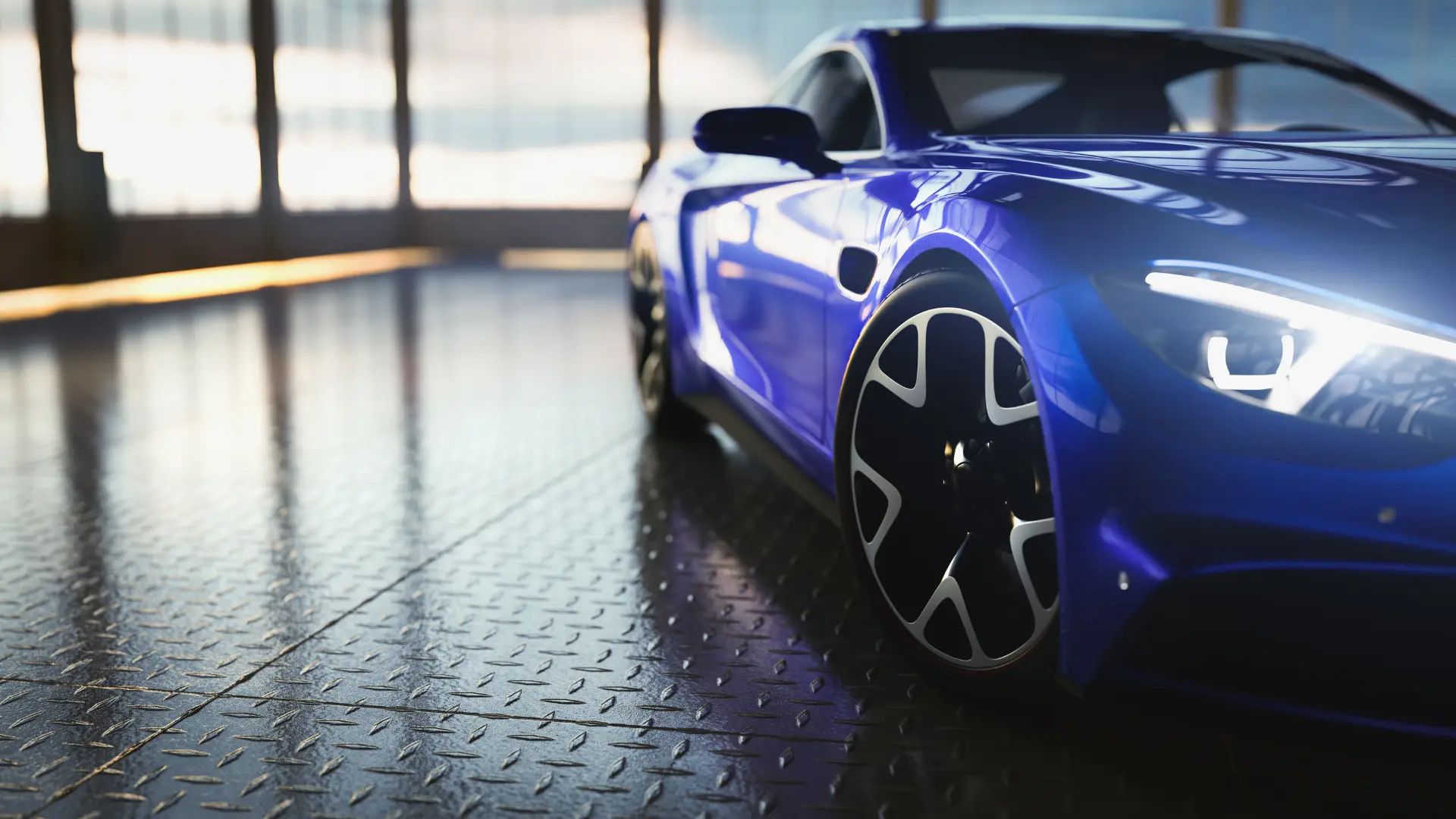
Most customers who come in for a full repaint ask three questions: how long, how much, and how do I know it's good work. This guide answers all three honestly — what we tell people at our Udayamperoor workshop before they commit.
The timeline
Single-panel repaint: 1-2 days
One door, one bumper, one fender. Includes prep, primer, base coat, clear coat, and polish. Most single-panel jobs finish next-day if dropped before noon.
Partial repaint (3-5 panels): 3-4 days
Side of the car, rear quarter, multiple body panels. Colour matching takes longer because we need to ensure consistency across panels. Drying and curing time stretches the job.
Full-body repaint: 5-7 days
Entire vehicle. Complete strip-down to primer level (or selective overlay if condition allows), full-body re-spray in our dust-controlled spray booth, multi-coat finish, polish, seal. The longest single project we run on a regular basis.
Restoration projects (multi-week) follow a different timeline — see our restoration page.
What drives the cost
Painting prices vary widely because the job varies widely. Here are the actual variables:
Paint type and quality
We use factory-grade automotive paint matched to the original colour code. Multi-stage paints (pearl, candy, metallic with flake) cost more than solid colours. Premium European paint formulations cost more than domestic equivalents.
Surface area
Single panel ≪ partial ≪ full body. Pricing scales mostly linearly — twice the area roughly equals twice the cost on the paint side.
Prep work
Existing paint condition determines prep. Fresh paint over good prep is the cheapest path. Sanding down to primer with body filler on multiple panels is the most expensive. We assess this at the inspection.
Body work and dent repair
If the car needs dent reshaping, putty, or panel replacement before paint, that adds hours and material cost. We often quote painting and body work separately so you see what each costs.
Colour change vs colour match
Repainting in the same colour is cheaper. Changing colours requires complete coverage of the original — typically 1-2 extra coats — and sometimes interior/door-jamb work to make the change look factory.
The five-stage process
What actually happens once your car is in the workshop:
Stage 1: Prep and protection
Wash, mask off non-paint surfaces (glass, trim, lights), tape edges. The longer this takes, the cleaner the final job. We don't rush this stage.
Stage 2: Sanding and primer
Sand existing paint to give the new coat something to bond to. Apply primer for adhesion and uniform colour base. Sand primer smooth.
Stage 3: Base coat
The actual colour. Multi-coat application — typically 2-3 coats — to build up depth and uniform coverage. Drying time between coats matters.
Stage 4: Clear coat
Transparent topcoat that gives the gloss and protects the colour underneath. Multi-coat application. The clear coat is what UV sees first; quality of clear coat heavily influences how long the paint job looks fresh.
Stage 5: Polish and seal
Final polish to remove any imperfections, machine application to bring out the gloss, optional ceramic coating to protect the new paint long-term.
Quality checks — what to look for at handover
When you come to pick up the car, here are the five things to check before you sign off:
- Colour match in different lighting. Look at the car in shade, in direct sun, and under indoor lighting. Quality paint matches across all conditions; cheap paint shifts noticeably.
- Edges and panel gaps. Where paint meets trim, door edges, mirror mounts. Should be clean lines with no overspray, no missed sections.
- Reflections in the panels. Look at long reflections (a tree line, a building edge) on a polished panel. Should be smooth, undistorted. Wavy reflections = uneven sanding underneath.
- Texture (orange peel). Run your hand over the panel. Should feel glass-smooth. Heavy "orange peel" texture means the clear coat wasn't laid down well or wasn't polished out.
- Dust nibs or debris in the paint. Look closely under direct light for small specks trapped in the clear coat. Some are unavoidable in any environment; lots = poor booth control.
Why we use a dust-controlled spray booth
Painting outside or in a general workshop environment pulls dust, hair, and debris into the wet paint. It sets in the clear coat. You're stuck with it permanently — the car looks slightly textured forever.
Our dust-controlled booth filters incoming air, runs at slight positive pressure to push contamination out, and keeps surfaces wiped down. The result: cleaner paint, fewer nibs, smoother clear coat, longer-lasting gloss.
Add-ons that earn their cost
- Paint correction before respray — only if the existing paint is being kept. Removes swirls and oxidation so they don't show through new paint. Adds 1 day, ₹4,000+.
- Ceramic coating after repaint — protects the new paint from day one. Adds 1-2 days, starts at ₹12,000.
- Engine bay detailing — only worth it if you're showing the car. Otherwise pure cosmetic. Adds 0.5-1 day.
- Glass coating — water beads on the windscreen too. Cheap add-on, 1-2 hours, useful for monsoon driving.
The most common surprise
The job is usually fine. The communication is usually where things go wrong. We've heard customers say "they didn't tell me they'd need to remove the bumper" or "the timeline was longer than promised."
That's why we quote in writing before any work starts, send WhatsApp updates at every stage, and stick to the agreed timeline. If something genuinely changes — a hidden dent surfaces during prep, a part takes longer to source — you'll hear about it the same day. No end-of-job surprises.
Ready to talk specifics?
WhatsApp us photos of the car (close-ups of any damage, plus a wide shot for context) and we'll quote the same day. Or drive in for a free inspection at our Udayamperoor workshop on Police Station Road. We'll walk around the car with you, explain what's needed, and give you a number you can decide on.
For specific service pages: Car painting in Udayamperoor, Car painting in Tripunithura, Premium car painting in Maradu, or the full car painting hub for Kochi.