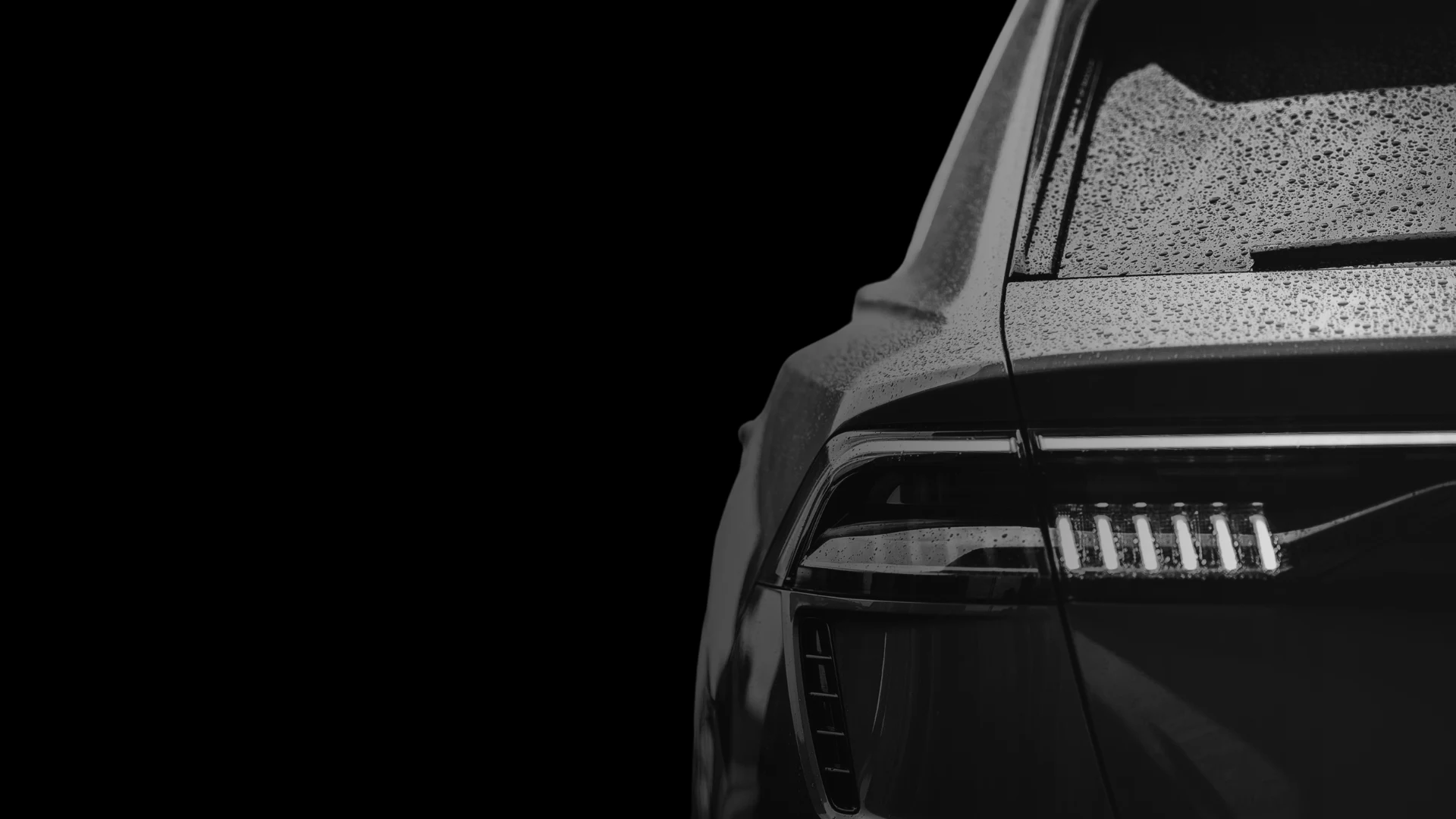
If you've talked to any detailing studio in Kochi about ceramic coating, you've probably heard durability promises ranging from "two years" to "ten years." The honest answer is more useful: ceramic coating lasts as long as the tier you pay for, the prep work that went in, and how the car is maintained — minus what Kerala's climate takes back.
This guide is what we tell customers at our Udayamperoor workshop before they book a coating. No jargon, no inflated promises. Just what to expect.
The honest answer on durability
We offer three ceramic coating tiers — 1-year, 3-year, and 5-year. Those numbers are manufacturer-stated durability for the products we use, under reasonable conditions. They're real, but they're a ceiling, not a floor.
| Tier | Stated durability | Best for |
|---|---|---|
| Tier 1 | Up to 1 year | Cars you'll change inside two years |
| Tier 2 | Up to 3 years | Most cars — the sweet spot |
| Tier 3 | Up to 5 years | Long-keep daily drivers and luxury cars |
Real-world durability in Kerala lands a little below those numbers if the car lives outside year-round, gets washed at petrol pumps with brushes, and never sees a top-up. It lands at or above those numbers if the car is parked under cover, washed properly, and gets the recommended decontamination at year intervals.
What Kerala's climate actually does to ceramic coating
Three things in Kerala work against any coating: monsoon, coastal salt air, and year-round sun. Each does a slightly different kind of damage, and ceramic resists each one differently.
1. The monsoon
From June through September, parts of Kerala see relentless rain. Ceramic's hydrophobic property — water beading and rolling off — is exactly what protects the paint here. The water doesn't sit on the surface long enough to deposit minerals, leave water spots, or react with anything underneath.
What hurts the coating during monsoon is not the rain itself, but what's in it — particulates, mineral deposits in hard water, occasional acid rain near industrial corridors. A monthly rinse-and-wipe through monsoon does more for ceramic longevity than any other single habit.
"What hurts the coating in Kerala isn't the rain itself — it's what's in it."
2. Coastal salt air
If you're in Maradu, Kumbalam, or anywhere along the backwaters, your car is breathing salt-laden air every day. Salt accelerates oxidation on raw paint. Ceramic's job is to keep that salt from contacting the clear coat at all.
The coating itself doesn't break down from salt — but if you skip washes, the salt forms a film on top of the ceramic. That film is what people mistake for "coating wearing off." It's not. A proper foam wash restores the ceramic's hydrophobic feel almost completely.
3. Year-round UV
Kerala doesn't have winter. Your car sees direct sun for around 11 hours a day in summer, 9 hours through the rest of the year. UV breaks down everything organic, including paint, plastic trim, and lower-quality coatings.
Better ceramic products contain UV inhibitors that absorb that radiation before it reaches the clear coat. Cheaper coatings — or older formulations — degrade faster under sustained UV, which is the actual reason a "5-year" coating sometimes feels like it's gone in 18 months.
Coatings don't fail dramatically. They fade gradually — water beads less, surfaces hold more dust, washes don't quite restore the same gloss. If you've had your car coated for 18 months and water still sheets off in clean droplets, the coating is doing its job.
What you can do to make it last
The single biggest variable in coating longevity isn't the product — it's how the car is washed and parked. We've seen 3-year coatings hold beautifully past five years, and we've seen 5-year coatings look tired by year two. The difference is almost always habit.
Wash like ceramic is on the car (because it is)
- Two-bucket method or a proper foam wash. No brush rolls. No petrol-pump kid scraping with a dirty cloth.
- pH-neutral shampoos only. The acidic shampoos most local washes use will accelerate coating degradation.
- Dry properly. Microfibre, not the same towel that wiped the wheels.
Park covered when you can
UV is the slowest, steadiest enemy of any coating. A covered car port, a basement, or a treated cover (washed periodically — covers themselves can scratch a coated car if dust gets between them and the paint) extends coating life noticeably.
Get the annual decontamination
For 3-year and 5-year tiers, we recommend an annual decontamination wash — clay-bar treatment, iron decontaminant, gentle wax-strip — to lift accumulated contaminants without abrasing the coating itself. It refreshes hydrophobic behaviour and adds about 25-30% to the coating's lived durability.
Picking the right tier for how you actually drive
Most customers ask for the 5-year tier because the math seems best — five years of protection for marginally more money than three. That's not always the right call. Here's how we usually advise:
- If you change cars every 2-3 years (common for company-leased and finance-rolled cars), the 1-year tier covers it.
- If you keep cars 4-6 years, the 3-year tier is usually the sweet spot. Refresh once at year three, get another two-three years out of it.
- If you keep cars long-term, daily-drive premium SUVs, or own multiple vehicles, the 5-year tier earns its premium.
If you want this conversation in person, drop the car at the workshop. We'll inspect the paint, talk through how you drive, and recommend honestly. Free vehicle inspection — no commitment.
When ceramic isn't the right answer
For all its strengths, ceramic isn't the universal solution. If your car already has visible swirl marks and clear-coat damage, ceramic alone won't fix that — it'll seal in what's there. You'd need paint correction first.
If you drive on highways with stone chips constantly hitting the front-end, ceramic doesn't stop physical damage — only paint protection film does that. Plenty of customers do ceramic + PPF in combination — film on the front end, ceramic everywhere else.
And if you drive city traffic where the car gets bumped and scraped weekly, the harder-shell graphene or borophine coatings resist scratch better than ceramic. Different problems, different tools.
The short version
Pick the tier that matches how long you'll keep the car. Wash properly. Park covered when you can. Get the annual decontamination on longer tiers. Done right, ceramic coating lives up to its rating in Kerala — and beyond.
If you want to talk it through, we're at WhatsApp 095448 74433 or our Udayamperoor workshop on Police Station Road. Bring the car or send photos. We'll quote the same day, with no surprises.